
Beyond Store Management: How Strong Retail Leaders Drive Performance, People and Profitability

A retail store can have the right products, competitive prices, efficient systems and an attractive layout—and still underperform.
Why?
Because operational resources alone do not guarantee results. Someone must translate business objectives into daily actions, motivate employees, resolve problems and ensure that standards are consistently maintained.
That responsibility rests with retail leadership.
The difference between an average store and a high-performing one often lies in the quality of leadership behind its daily operations.
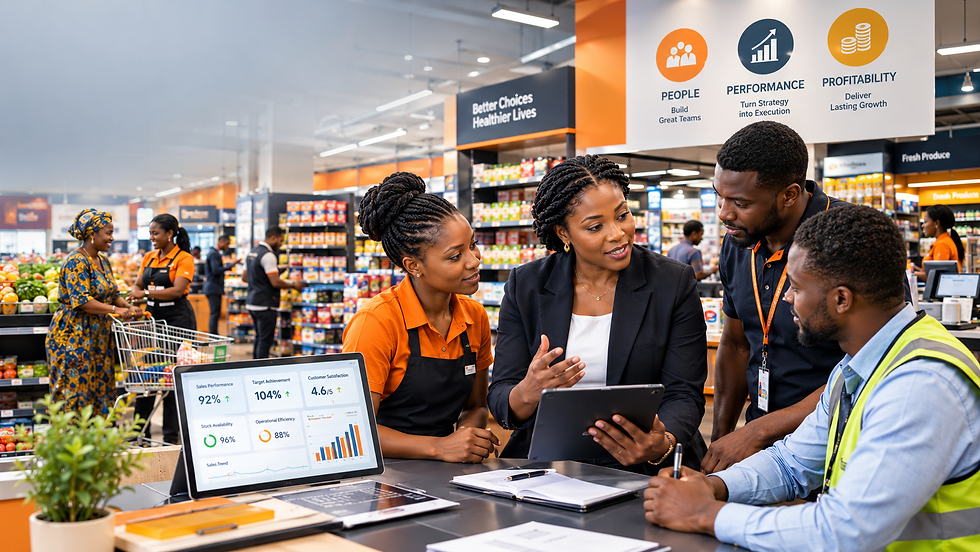
1. Great Retail Leaders Turn Strategy into Execution
Retail businesses frequently invest time developing growth strategies, improving customer experience and setting sales targets. Yet these ambitions can fail at store level when managers lack the skills to translate plans into practical action.
Effective retail leaders understand business priorities and communicate them clearly to their teams.
They establish expectations, monitor performance, address gaps and ensure employees understand how their individual responsibilities contribute to wider business objectives.
Strategy only creates value when it becomes consistent execution.
2. People Performance Starts with Leadership
Frontline employees shape the customer's experience every day.
Their attitude, product knowledge, responsiveness and ability to solve problems can influence customer satisfaction and loyalty.
However, employees cannot be expected to perform consistently without proper direction, coaching and support.
Strong retail leaders develop their teams through regular feedback, practical training, recognition and clear accountability.
They do more than assign tasks. They build an environment where employees understand expectations, take ownership and feel equipped to succeed.
3. Retail Leaders Must Understand the Numbers
Leadership effectiveness cannot be measured by activity alone.
A store manager may keep the shelves stocked and the team busy while the store continues to miss sales targets or lose margin through waste, poor inventory control and unnecessary expenses.
Today's retail leaders need commercial awareness.
They should understand sales performance, gross margins, stock availability, inventory losses, customer satisfaction and labour productivity.
These metrics help managers identify problems early and make decisions based on evidence rather than assumptions.
A great retail leader understands both people and performance.
4. Close the Gap Through Leadership Development
Many retail employees are promoted into management because they are experienced, hardworking or excellent salespeople.
But managing a team requires a different set of capabilities.
New managers may need development in communication, delegation, conflict resolution, coaching, financial literacy and performance management.
Retail businesses should therefore treat leadership development as a strategic investment—not a one-off training event.
Structured development programmes, mentoring, performance reviews and practical coaching can help managers build the confidence and competence required to lead effectively.
5. Build a Culture of Accountability and Continuous Improvement
Strong retail leaders do not wait until the end of the month to discover that performance has declined.
They establish regular performance conversations, review operational indicators and encourage employees to identify opportunities for improvement.
They also distinguish between problems caused by unclear processes, insufficient skills and poor accountability.
This approach makes it easier to address root causes rather than repeatedly treating the symptoms.
Over time, effective leadership creates a culture where improvement becomes part of everyday work.
Final Thought
Retail leadership is not simply about supervising employees, opening stores on time or ensuring daily tasks are completed.
It is about creating the conditions in which people perform better, customers receive greater value and business objectives translate into measurable results.
For retail organizations seeking sustainable growth, developing capable store leaders must be a business priority.
Great stores do not happen by accident. They are built by leaders who know how to develop people, manage performance and execute strategy.
Because in retail, leadership is not just a management function. It is a competitive advantage.
#RetailLeadership #RetailManagement #RetailStrategy #RetailPerformance #StoreManagement #RetailGrowth #LeadershipDevelopment #RetailOperations #PeopleManagement #EmployeePerformance #RetailTraining #TalentDevelopment #BusinessLeadership #StrategicExecution #PerformanceManagement #CustomerExperience #RetailProfitability #HighPerformingTeams #OperationalExcellence #RetailBusiness #AfricanRetail #RetailAfrica #BusinessGrowth #CapabilityBuilding #MazNovok


Comments