
The New Retail Economy: How African Businesses Can Adapt, Compete and Thrive in a Changing Market

The retail industry in Africa is undergoing a significant transformation. Changing consumer expectations, rising operating costs, digital innovation, increased competition, and evolving economic conditions are reshaping how businesses attract customers, manage operations, and generate profits.
Today's consumers are more informed, more connected, and increasingly selective about where and how they spend their money. Convenience, affordability, product availability, service quality, and overall customer experience are becoming just as important as price.
For African retailers, the message is clear: the strategies that sustained yesterday's growth may not be sufficient to secure tomorrow's success.
So, how can businesses adapt?

1. Embrace Digital Transformation
Technology is no longer simply an additional business advantage; it is becoming central to retail competitiveness.
From digital payment solutions and e-commerce platforms to inventory management systems and customer analytics, technology can help retailers improve efficiency, understand consumer behaviour, and make better business decisions.
However, digital transformation goes beyond having an online store or social media presence. It requires integrating technology into everyday business operations to improve productivity, profitability, and customer experience.
2. Put the Customer at the Centre of Business Strategy
Modern consumers expect more than products on shelves. They want convenience, reliability, personalized experiences, and consistent service.
Retailers must therefore rethink how they engage customers across physical stores, digital platforms, and delivery channels.
Understanding customer preferences, monitoring feedback, improving service delivery, and creating seamless shopping experiences can strengthen customer loyalty and encourage repeat purchases.
In the new retail economy, customer experience is not just a marketing responsibility; it is a strategic business priority.
3. Strengthen Operational and Financial Efficiency
In an environment characterized by fluctuating costs, inflationary pressures, and changing consumer purchasing power, operational efficiency is essential.
Retail businesses must pay closer attention to inventory management, procurement, pricing strategies, supply chain processes, and cost control.
High sales volumes do not automatically translate into strong profitability. Businesses must understand where revenue is generated, where costs accumulate, and where hidden inefficiencies affect their bottom line.
The ability to protect margins while delivering value to customers will increasingly distinguish successful retailers from struggling competitors.
4. Build Flexible and Resilient Business Models
African retail businesses operate in markets where economic conditions, consumer behaviour, infrastructure, and supply chains can change rapidly.
Rigid business models may struggle to respond effectively to these realities.
Retailers need flexible operating structures, diversified sourcing strategies, adaptable pricing models, and the ability to respond quickly to emerging opportunities and market disruptions.
Resilience is no longer just about surviving difficult conditions; it is about building an organization capable of adapting and remaining competitive.
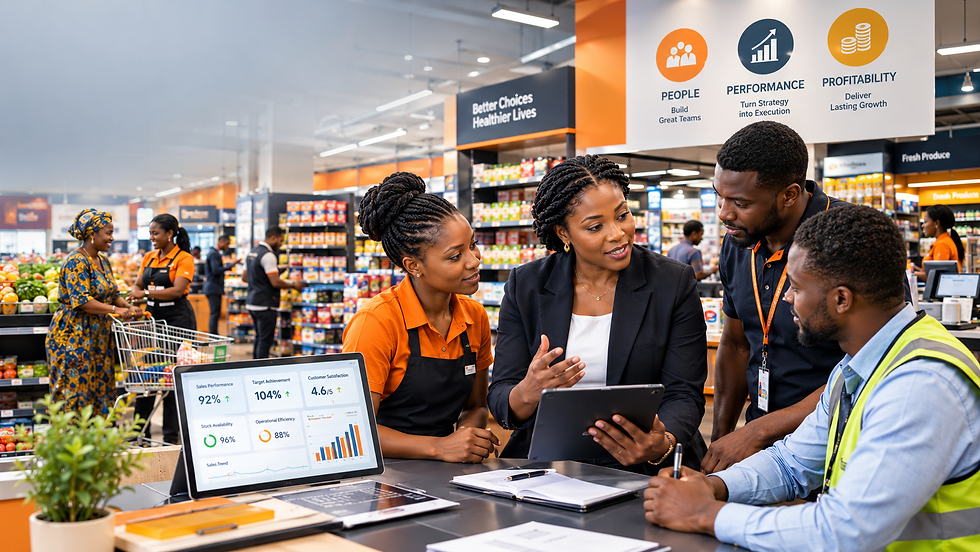
5. Invest in People, Innovation and Strategic Leadership
Technology and systems are important, but people remain central to business success.
Retail organizations need employees who understand business objectives, deliver excellent customer experiences, embrace innovation, and take ownership of performance.
Leadership must also evolve. Business leaders need to move beyond managing daily operations towards building strategic capabilities, encouraging innovation, and aligning teams around measurable business outcomes.
Innovation should not simply be about introducing new products or technologies. It should involve finding smarter ways to solve business problems, improve processes, create customer value, and generate sustainable growth.
The Way Forward
The new retail economy presents both challenges and opportunities for African businesses.
Those that embrace digital transformation, understand their customers, strengthen financial discipline, improve operational efficiency, and invest in people will be better positioned to compete in an increasingly dynamic marketplace.
Ultimately, success will not depend solely on the size of a business, the number of stores it operates, or the volume of products it sells. It will depend on how effectively it creates value, manages resources, responds to change, and executes its strategy.
At Maz Novok, we believe sustainable retail growth begins with the right strategy and is achieved through disciplined execution, continuous innovation, and measurable results.
The question for every retail business is no longer whether the market is changing. It is whether the business is prepared to change with it.
Adapt. Innovate. Execute. Thrive.
#AfricanRetail #RetailIndustry #RetailBusiness #RetailStrategy #RetailInnovation #AfricanBusiness #DigitalTransformation #BusinessGrowth #RetailManagement #CustomerExperience #BusinessStrategy #OperationalEfficiency #RetailTechnology #BusinessInnovation #StrategicLeadership #RetailTrends #Profitability #BusinessTransformation #EmergingMarkets #MazNovok


Comments